trauerlicht — A safe space for your grief.
Holistic Grief Counseling.
For people who are carrying grief that longs to be fully met.
Holistic Grief Counseling with Ursula Hohlweg.
I help people find the light that their grief is holding.
Whether your loss happened yesterday or thirty years ago — grief that has never been fully seen, heard, felt and understood does not disappear. It waits.
And when you are ready — it can finally be met.
Grief is the most devastating experience a human being can go through.
It can make the world feel completely unrecognizable. It can make you feel like you are too much — too sad, too broken, too heavy for the people around you.
Like you have to manage your pain so that others are not overwhelmed by it. Like you are carrying something that no one else can quite hold.
What I have come to know — through my own encounters with death, and through years of sitting with people in the deepest places of their grief — is this: grief is not only loss. Inside the devastation, hidden beneath the pain, there is something extraordinary waiting to be found.
A clarity. A closeness to what actually matters. A connection to your own essence — and to something much larger than the loss itself.
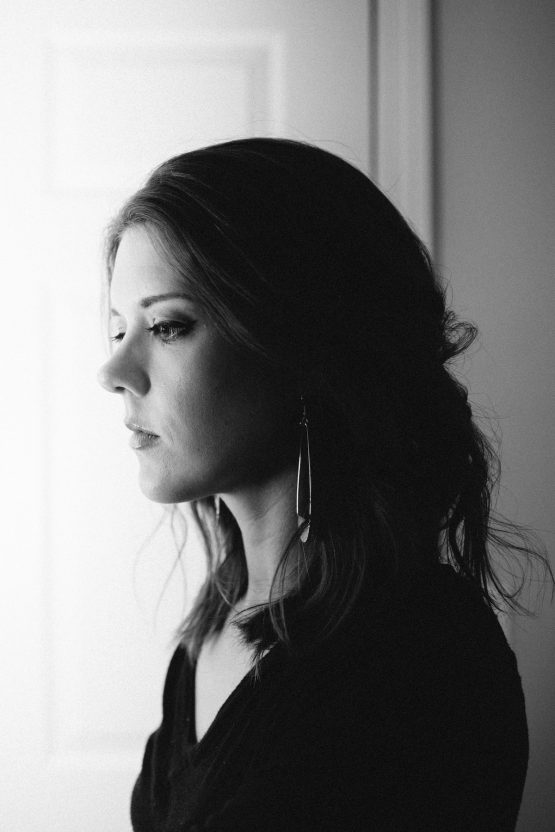
Your greatest light is hidden inside your greatest darkness.
My work is to help you find it.
Grief requires more than words.
Who I work with.
The people I work with carry different losses — but they share one thing: grief that deserves to be fully met. Some have stopped believing that is even possible. Others simply know they cannot carry it alone any longer.
Grief is not only the loss of a person. It is the loss of a life you expected to live, a love you needed and never received, a version of yourself that did not survive what happened to you.
If any of this sounds like you — you have found the right place.
Your grief reaches the very core of who you are.
How I work.
My work integrates three levels — because grief does not live in only one place.
It lives in your thoughts and your stories. It lives in your body — in your chest, your breath, your nervous system. And it lives in the deeper questions that loss always brings: Who am I now? What does this mean? What remains?
True healing requires that all three are met.
Conversation.
Grief counseling.
In conversation, we bring what is unconscious into the light. We name the patterns, the beliefs, the stories that grief has written into your life — and we begin to rewrite them.
We go deep. We create clarity where there was confusion, and order where there was chaos.
And sometimes, the most powerful thing we do is simply sit together in silence – and let what needs to surface, surface.
Touch.
Craniosacral Therapy.
Through craniosacral bodywork, we work with what the body is holding.
Grief lives in the body — in the chest, in the sacrum, in the places where the nervous system has been bracing against the loss.
Touch reaches what words cannot.
It speaks directly to the nervous system, releases what has been held for too long, and allows the body to remember what it feels like to be at rest.
Wisdom.
Kabbalistic teachings.
Through spiritual wisdom — drawn from ancient Kabbalistic teachings and from my own direct experience — we work with the deeper meaning of what you are going through.
Because grief, at its deepest level, is a spiritual event. It does not only ask to be processed — it asks to be understood.
Here, we meet that dimension directly — and find that even the greatest darkness carries its own light.
This work unfolds in three phases:
Holding the pain. Living through the grief. Finding new life.
This is not a linear path — we move at your pace, in your way.
Your grief shows you how much you love.

Certified Grief Counselor
Certified Life and Social Counselor (Psychosocial Counseling)
Marriage and Family Counselor (in training)
Certified Craniosacral Therapist
Certified Kabbalah Counselor
Author
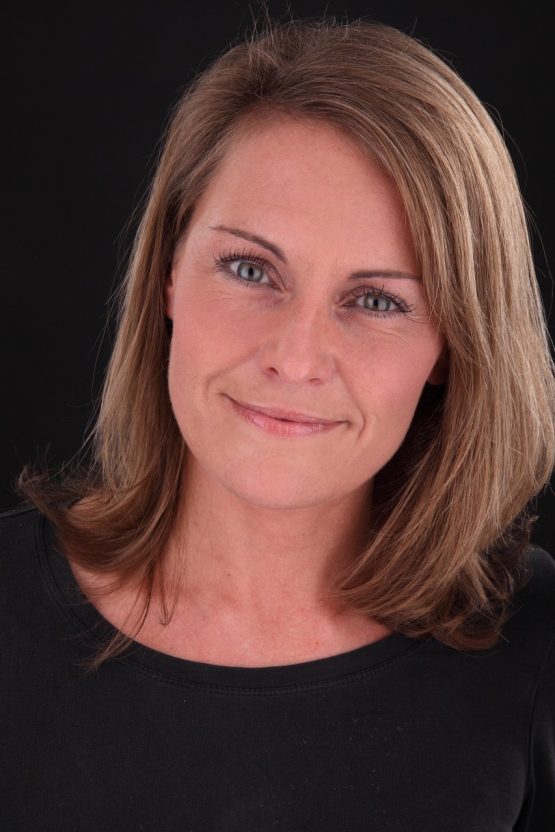
Hi, I'm Ursula.
I have walked through my own losses and darkness. I know the pain that defies words.
And I have been close to death myself — twice. I came back both times knowing something about what lies beyond the greatest darkness.
That knowing is not something I learned from a book. It is something I carry. And it is what allows me to sit with you in your darkest places without flinching — because I have been there myself.
I have spent years studying Kabbalistic wisdom, Craniosacral Therapy, and the many dimensions of healing, grief and loss.
But what my clients tell me, again and again, is not that my methods helped them. It is that they finally felt held, accepted and supported. That they were able to fully let go. That finally someone could take the full weight of what they were carrying – and not be overwhelmed by it.
That is what I offer. Not just a method. A container strong enough to hold whatever you bring.
If you are ready to stop carrying this alone – I am here.
With love,

When you truly embrace your grief, your healing begins.
Testimonials.
I am honored to hold space for the people who come to me.
I am deeply grateful for each one.
These are the words of people who trusted the space I offer with their grief.
„Everything we did worked, and it worked instantly, like a miracle, it was instantaneous. You changed the way I perceived everything. Since then, I have never felt any of the things I came to you about. I felt free! And free to love, and not guilty, and no longer „catching up“ on what I thought I missed… I have since told a couple of friends about my experience. The best way I could describe it all was, ‚This wonderful woman does somatic massage, but really that’s not it, because she talks to you and seems to know exactly what to ask, but that’s not it either, because I think what it really is is that this woman is an angel.‘ Thank you for everything.“
„I have had the honor of working with Ursula for several appointments over the past 2 years.
I attend when I feel I need some extra help in getting to where I need to be. Each session has had a profound effect on myself mentally, physically and spiritually.
Ursulas capabilities are amazing and I highly recommend booking a session if you really want things to shift in your life.“
You are not alone in your grief.
trauerlicht - A space that's truly there for you.
What I offer you does not begin in the session — and it does not end when you leave. Here you will find everything you need to know about what working with me looks like: how much time we take, what is possible between sessions, and what makes this space different.
(Open each section to learn more)

Each session is designed to give you exactly the space you need — not more, not less. Between 70 and 90 minutes: enough time for depth, for your inner movements, and for gentle integration before you return to your day.
The first session often runs a little longer. We take the time to understand your full story — your concerns, your history, your family dynamics, and what your body is carrying — so that I can truly support you as a whole person.
I deliberately schedule my practice day with ample time between appointments — this gives you plenty of time to process your experiences, reflect, and gently return to your daily routine.
There’s no rush because my next client isn’t waiting. You can take your time to have another glass of water, chat with me, or just sit in silence, and leave the office at your own pace.
There is no fixed rhythm that works for everyone. Many clients begin with sessions every one to two weeks — and as the process deepens, the intervals naturally become longer. We find the pace that is right for you, and we adjust it as you change.
After the session, if you’d like, you’ll receive a brief message summarizing the key takeaways and offering helpful tips for incorporating them into your daily life.
If you have any questions or topics come up between our sessions, feel free to contact me anytime by phone or WhatsApp — I’m here for you.
Our appointments are a commitment — to your process and to the space I hold for you. You may cancel free of charge up to 24 hours in advance. Cancellations after that point will be charged in full.
Individual session for grief counseling, life and social counseling, and craniosacral bodywork: EUR 155.00 (70 to 90 minutes)
Kabbalah Life Analysis: EUR 650.00 (100-minute consultation plus 4 to 6 hours of preparatory analysis)
Fees are exempt from sales tax pursuant to Section 6(1)(27) of the Austrian Sales Tax Act (UStG). Payment is due in cash or by debit or credit card directly on site at the end of the session. Package deals available upon request.
If you are experiencing financial difficulties, please feel free to contact me — we are sure to find a solution.
If you are already a client of mine, our current fee agreement will remain in effect until the end of the year (December 31, 2026).
Some private supplemental insurance plans, as well as the SVS, cover the costs of craniosacral therapy. For self-employed individuals, the „Gesundheits-Hunderter“ program offers reimbursement for life and social counseling and grief counseling. Please check with your insurer to find out under what conditions a portion of the costs will be covered.
The practice is located in the 21st district, Pius-Parsch-Platz 9.
It is very easily accessible by public transport, just a 2 – 3 minute walk from the U6 and S-Bahn station Floridsdorf.
Public parking is limited and subject to fees due to the short-stay parking zone throughout the area. Alternatively, the Interspar parking garage at Franz-Jonas-Platz and the Pius-Parsch-Platz parking garage are both available in the immediate vicinity.
My work is not medical, psychological, or psychotherapeutic care. It is professional psychosocial and energetic support — a space where your grief is met with full presence, depth, and care.
Your grief transforms you on the deepest level.
Contact - Your first step.
It takes courage to reach out when you are in the middle of grief.
If you feel ready — I am here.
There is no obligation, no pressure. Just a space where you can say what you have not been able to say anywhere else. A space where you can find the light within.
Email me or send me a WhatsApp message. I’ll reply to you personally — within 24 hours.
I look forward to hearing from you.
Ursula Hohlweg
Holistic Grief Counseling
+43 664 1226000 | ursula@trauerlicht.at
Holistic Health Practice Floridsdorf
A 1210 Wien, Pius-Parsch-Platz 9/Top 1
Are you feeling overwhelmed right now and need immediate help?
My blog post „First Aid for Grief“ — available in German — offers valuable self-help tips and emergency hotlines that are available 24/7.